


The Blog

On Being Truly Thankful
By Tim Hunt
A Clearing in the Noise
Thanksgiving has a way of slowing us down. Even in years that feel full, complex, or unsettled, this week creates a small clearing where we can pay attention to our families, to our memories, and to the blessings that do not always announce themselves until we are quiet enough to notice.
As I look back on the last few days, I returned to an insight that is simple but surprisingly difficult to hold. Everything is gift. Not gift in a sentimental or vague sense, but gift in the deeper and humbling way that reminds us we did not earn our blessings and we are not owed them. Life, its relationships, surprises, mercies, and second chances, comes to us as something unmerited.
Seeing the Giver and Living the Response
A deeper movement of gratitude flows from this awareness. If everything is gift, then the source of those gifts is not ourselves. Gratitude is not only about feeling thankful. It is about recognizing the Giver. When we see our lives through that lens, we begin to notice mercy everywhere: mercy that is patient with our limitations, mercy that meets us in places we did not expect, mercy that has carried us farther than we sometimes admit.
And there is a third movement. Our inability to repay what we have received. Gratitude is not a transaction. It is a response. And the response is not to try to balance some cosmic ledger. It is to align our lives with the intention of the One who gives. We receive blessings so that we can use them toward goodness, generosity, compassion, and love.
Mercy in Unlikely Places
This has been on my mind alongside something very different. Abraham Lincoln’s Thanksgiving
Proclamation of 1863. He wrote it in the middle of the Civil War, which was the darkest chapter
in American history. He had every reason to focus on loss, fatigue, and division. Yet his proclamation reads like a long list of blessings. At one point he writes:
“They are the gracious gifts of the Most High God, who, while dealing with us, hath nevertheless remembered mercy.”
In simple language, Lincoln was saying that God meets us in our struggles and still chooses to show mercy.
Lincoln did not soften the reality around him. But he refused to lose sight of the mercy still present. He did not wait for the war to end to give thanks. He did not wait for clarity or comfort. Gratitude for him was an act of truth telling. It acknowledged that even in crisis the blessings of the country were real and that their source was not the government or circumstance but God.
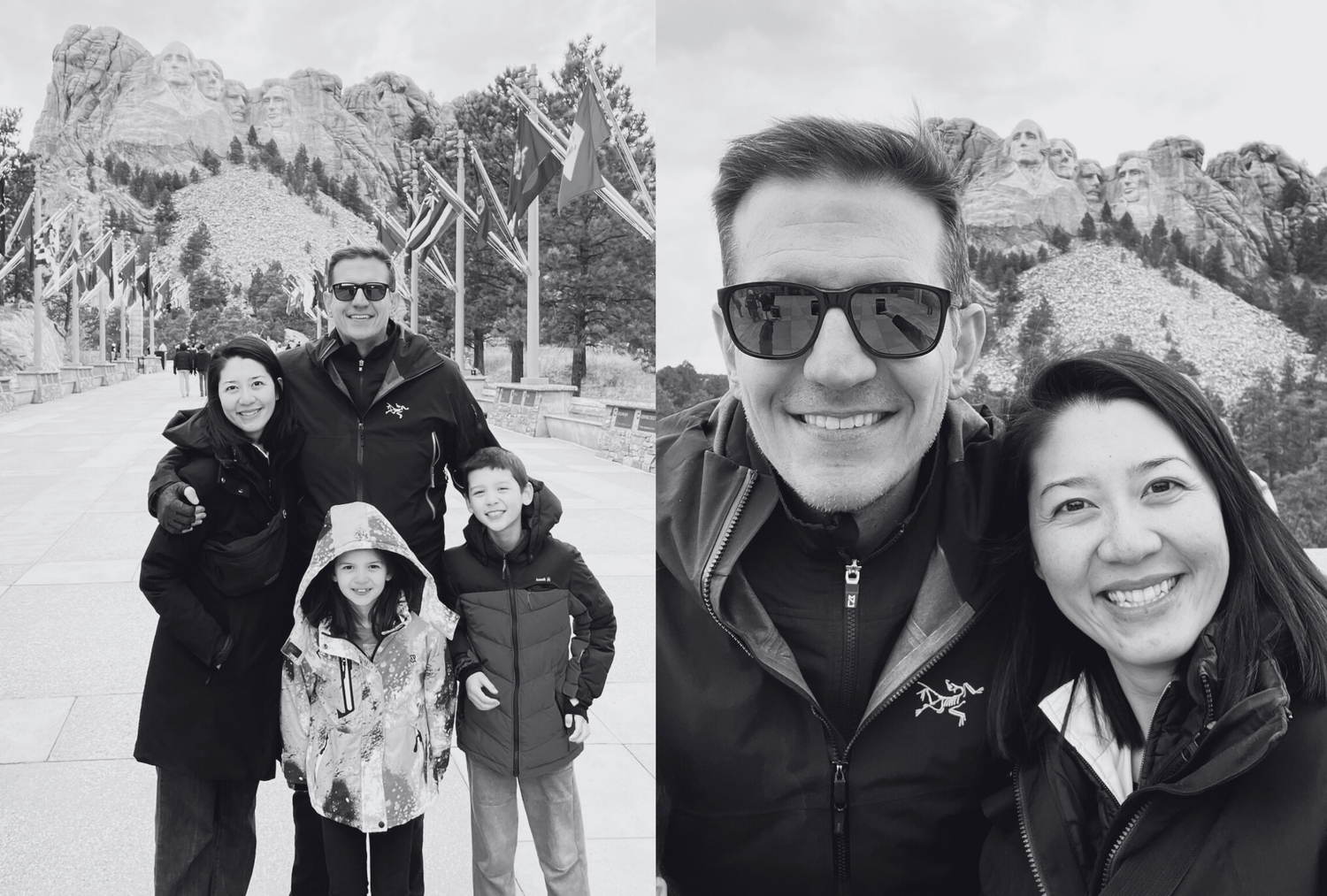
Yesterday we took a brief Black Friday trip to Mount Rushmore, and I found myself pausing at Lincoln’s face carved in stone. It reminded me that gratitude is not naive. It is chosen. It is practiced. And it is powerful, especially when life is complicated.
Gratitude as the Doorway Into Advent
And now, as Thanksgiving gives way to the first Sunday of Advent, my thoughts turn toward the season ahead. Advent is the time Christians prepare for the coming of Christ incarnate at Christmas. It is a season of waiting, hoping, longing, and staying awake to the ways grace is already moving in our lives. Advent has a way of stirring things up spiritually. It invites us not only to remember that Christ came in history, but to prepare our hearts for his coming again in a deeper and more personal way.
Advent tells us that light is on its way even when the world feels dark. Gratitude becomes the way we stay ready for that light. It clears space in our hearts so that we can recognize hope when it arrives, not only in big dramatic moments, but also in the small and quiet ones.
So wherever this weekend finds you, may you enter Advent with a grateful heart, ready to notice the gifts already around you and the greater hope that is drawing near in Christ.
© 2025 See What Love LLC | All rights reserved